Zurich and Geneva sit at opposite ends of Switzerland, roughly 280 kilometers apart, and the journey between them is one of the most common long trips in the country. Business travelers shuttle between the financial hub in the east and the diplomatic and private-banking center on Lake Geneva. Tourists arriving at one airport often want to end up near the other. And plenty of people simply need to be in both cities in the same day. The good news is that Switzerland gives you several genuinely good ways to cover the distance. The useful question is which one fits your particular trip.
This guide walks through every realistic way to get from Zurich to Geneva: the train, driving yourself, flying, and a private transfer, with honest notes on cost, time, and when each one makes sense. We offer private transfers, so treat our view accordingly, but we have been straight about where the train or a rental car is the better call. For a lot of trips, it genuinely is.
How far is it from Zurich to Geneva?
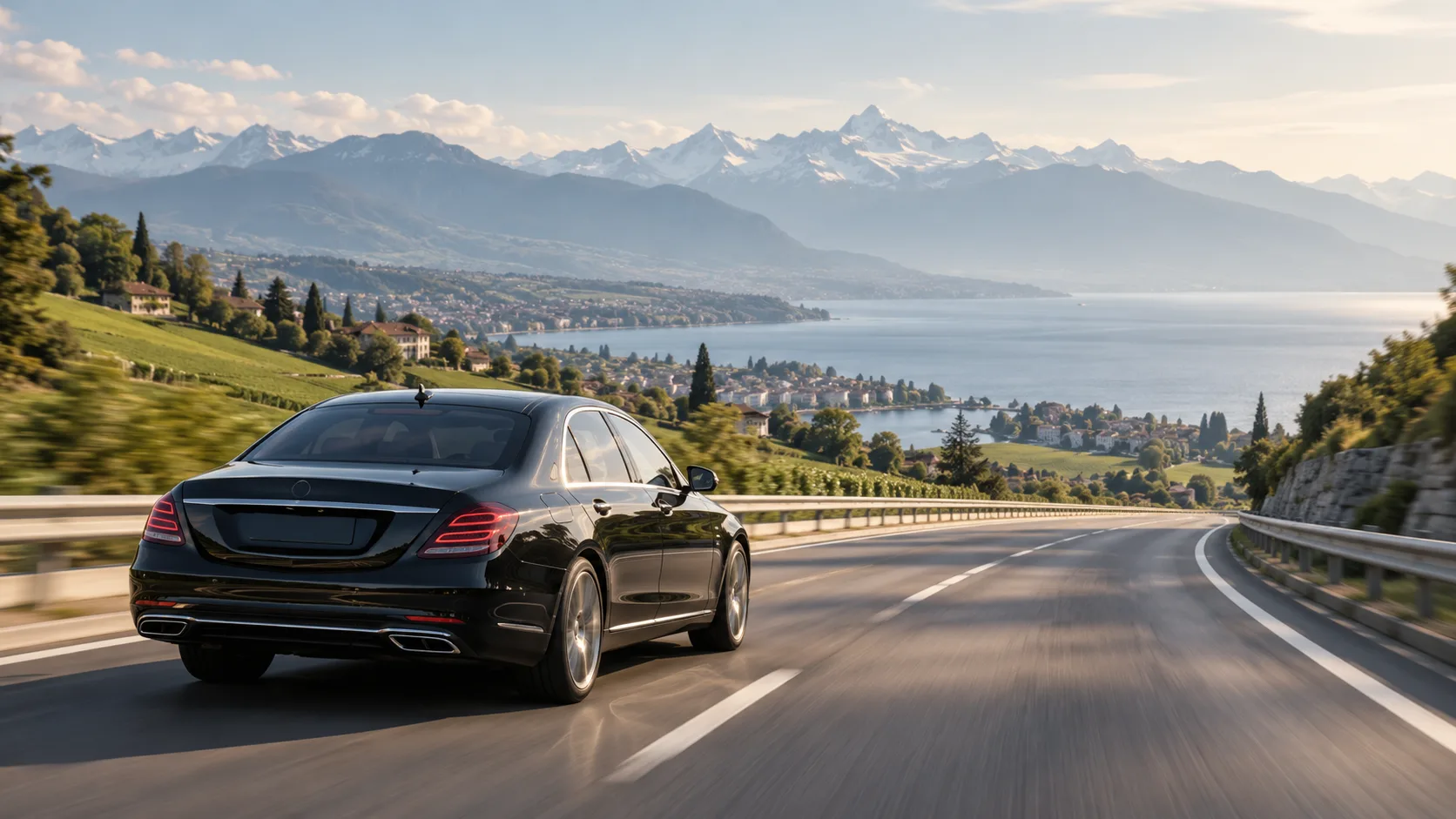
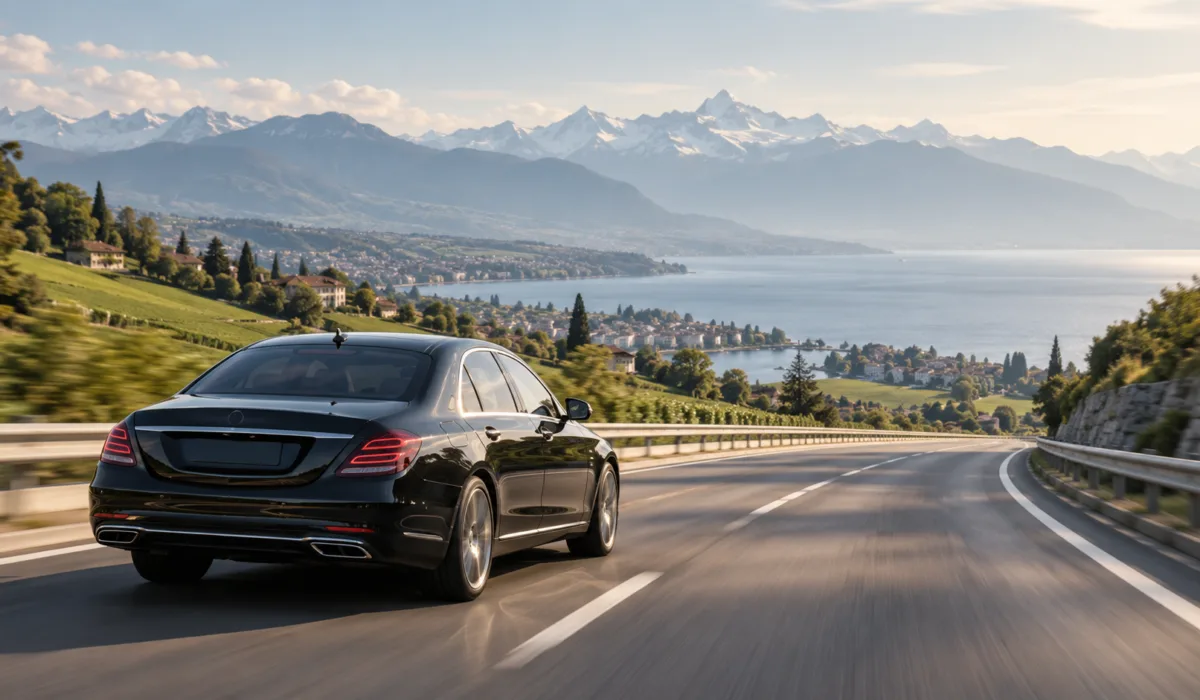
The two cities are about 280 kilometers apart by road, which translates to roughly two and a half to three hours of driving in normal conditions. The route runs largely along the A1 motorway, skirting Bern and following the shape of the country from the German-speaking east to the French-speaking west. It is a straightforward drive on excellent roads, though the stretches around Bern and the approach to Geneva can slow at peak times. The distance matters because it sits in an awkward middle zone: too far to be a quick hop, but not so far that flying is obviously worth the airport overhead.
Is the train from Zurich to Geneva worth it?
For most solo travelers and anyone comfortable with a rail journey, the direct train is excellent and is often the smartest choice. Swiss intercity trains run between Zurich and Geneva roughly every half hour, take a little under three hours, and deposit you in the center of each city rather than on its outskirts. The trains are clean, punctual to an almost unreasonable degree, and comfortable enough to work or doze through the whole trip. A standard second-class fare is far cheaper than any private car, and first class is still reasonable. If you have a Swiss Travel Pass or a half-fare card, the economics get better still.
The train’s strengths are real and worth taking seriously. You can open a laptop and actually get three hours of work done, the scenery along Lake Geneva at the western end is lovely, and you never touch a steering wheel or watch a fuel gauge. For a single traveler on a budget, or anyone who would rather read than drive, it is hard to argue against.
Where the train gets less convenient is at the ends of the journey and with the realities of luggage and groups. Both city stations are central, but if your true start or finish is a suburban hotel, a private residence, or Zurich Airport, you add a connection and a short local trip at each end. With heavy bags, a couple of children, or three colleagues and their cases, the choreography of platforms, changes, and a packed carriage stops being relaxing. And the train runs on its timetable, not yours: miss one and you wait for the next, which is fine until the day you cannot afford to.
Should you drive yourself from Zurich to Geneva?
Driving yourself makes sense if you want flexibility along the way and are comfortable on Swiss motorways, but the full cost is higher than the rental sticker suggests. A rental car gives you the freedom to stop in Bern, detour to Gruyère, or break the trip wherever you like, and for a family or small group the per-person cost can undercut several train tickets. The roads are superb and well signed, and the drive itself is not demanding.
The honest catch is that the headline rental price is not the real price. Switzerland requires a motorway vignette, fuel is expensive, and parking in central Geneva is both scarce and costly. You also arrive having done the driving yourself, which is the opposite of restful after a flight or before a day of meetings. If the trip is a leisurely one with stops you actually want to make, self-driving earns its place. If it is simply a transfer from one city to the other, you are taking on effort and hidden costs for a flexibility you may not use.
What about flying from Zurich to Geneva?
There are short domestic flights between Zurich and Geneva, but once you count airport time at both ends, flying rarely saves time over the train and usually costs more. The flight itself is under an hour, which looks appealing on paper. In practice you add the trip out to Zurich Airport, check-in and security, boarding, the wait, and then the journey from Geneva Airport into the city. By the time all of that is totaled, the door-to-door time is often no better than the three-hour train, and frequently worse, at a higher price and with more friction. Flying only really makes sense as part of a longer international itinerary where you are connecting through one of the airports anyway.
When is a private transfer the right choice?
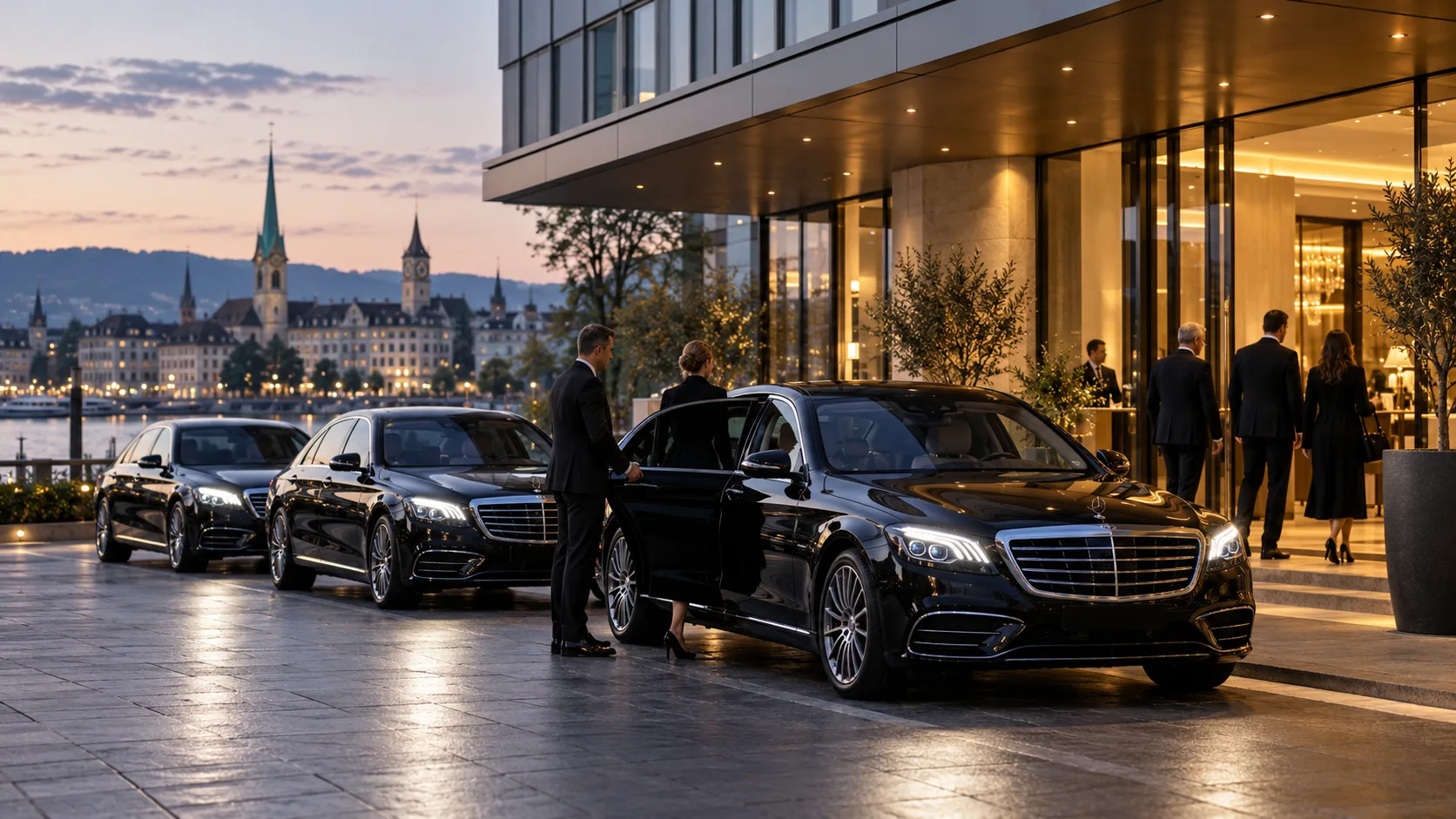
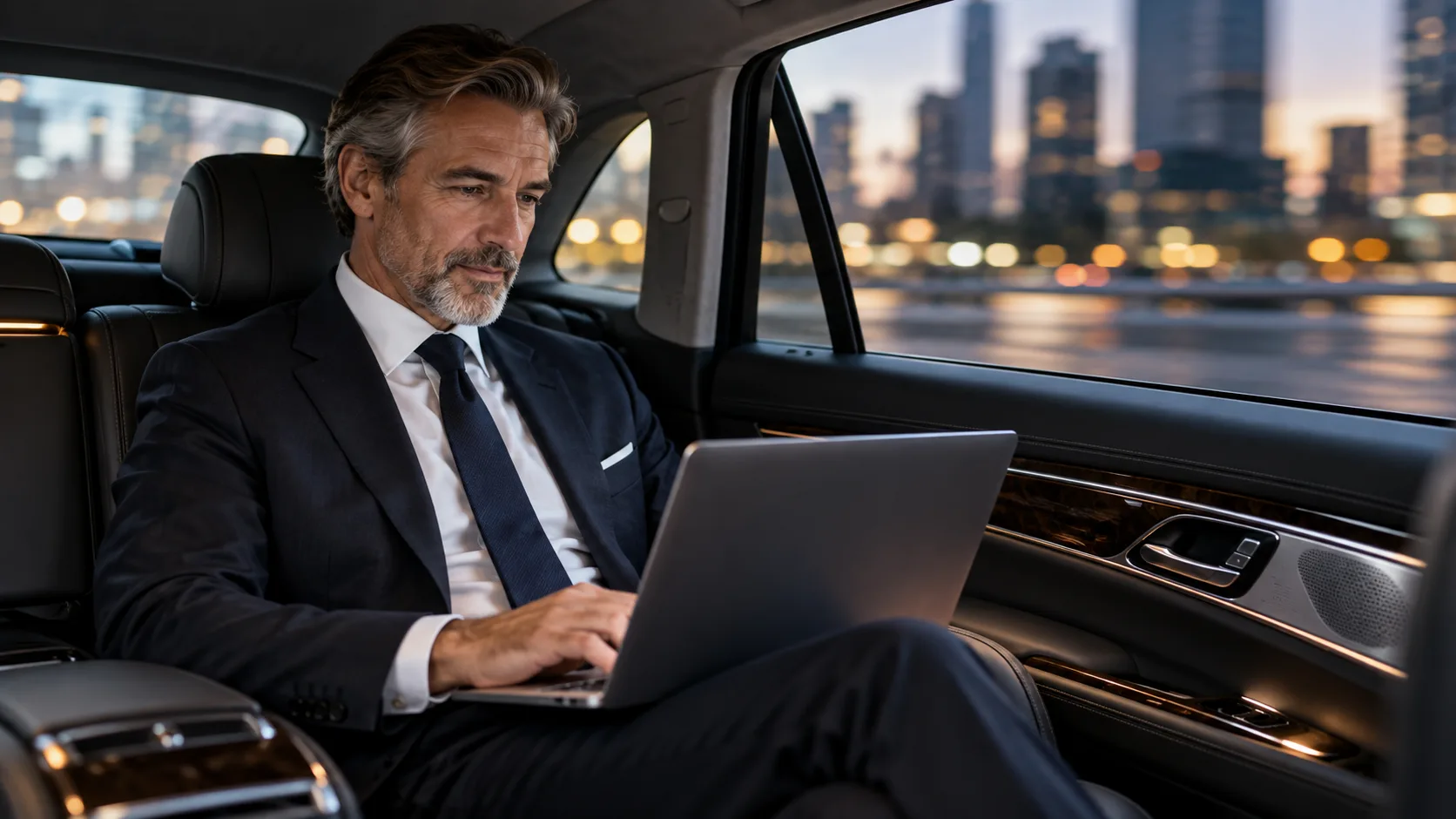
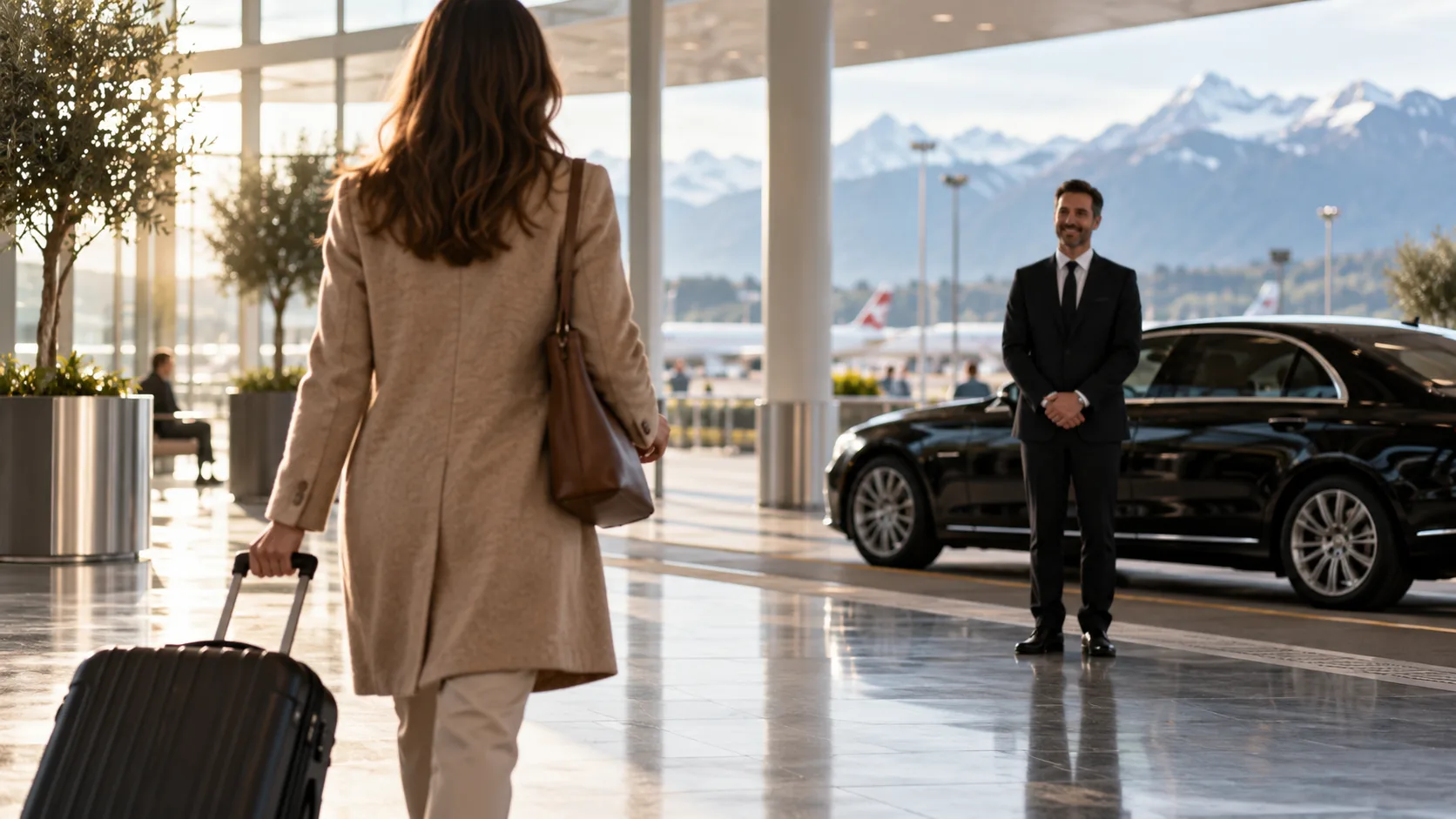
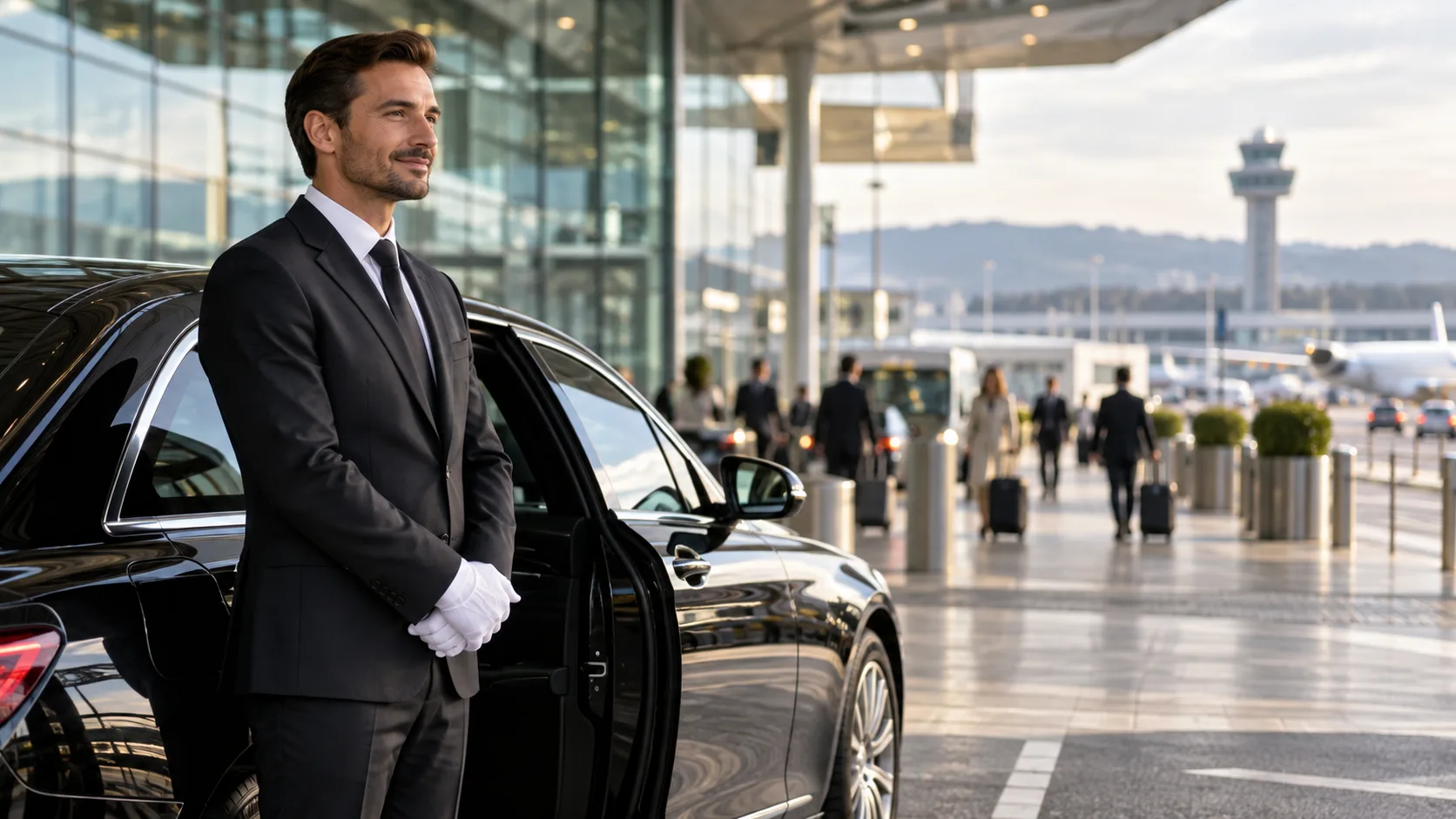
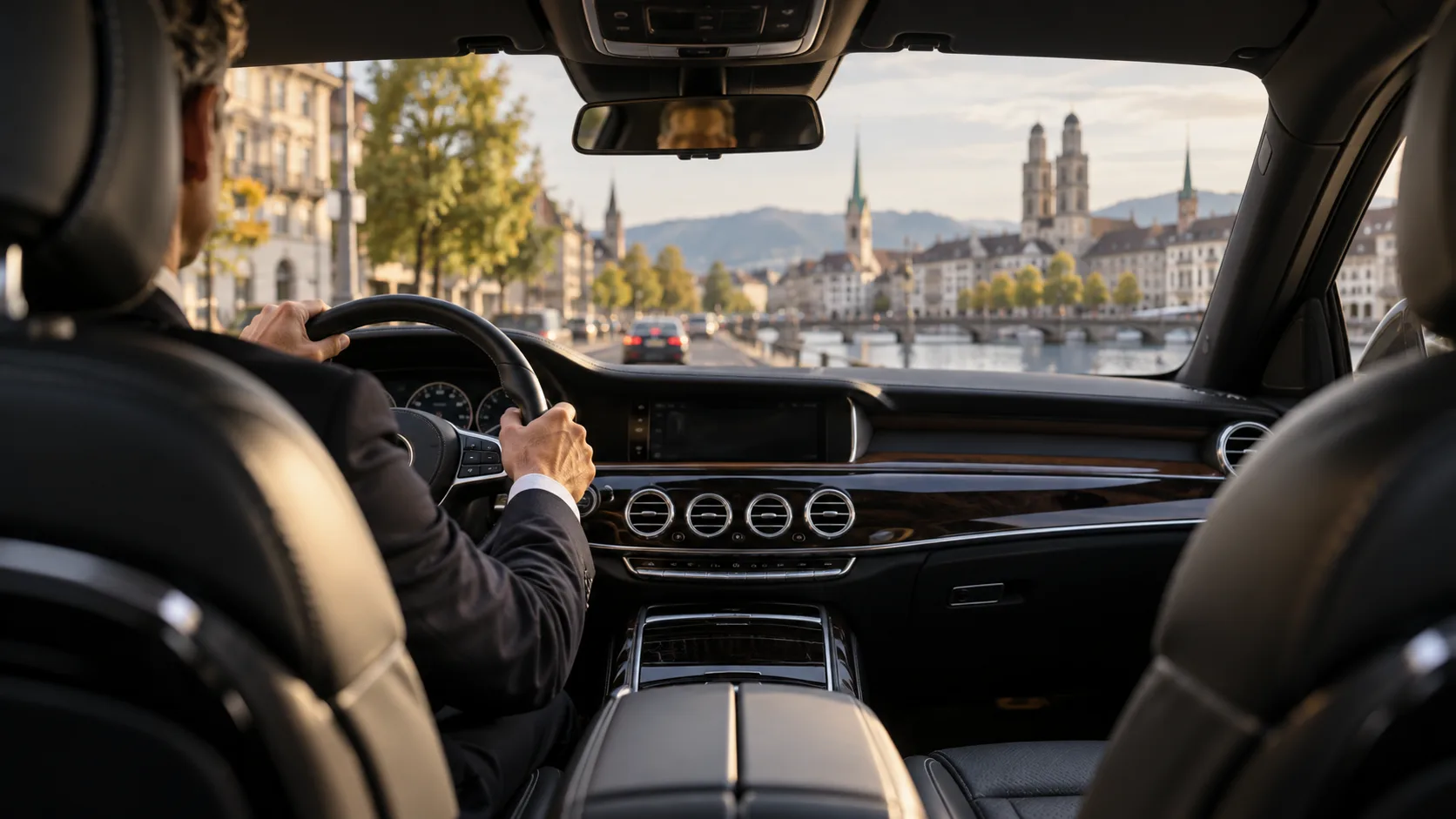
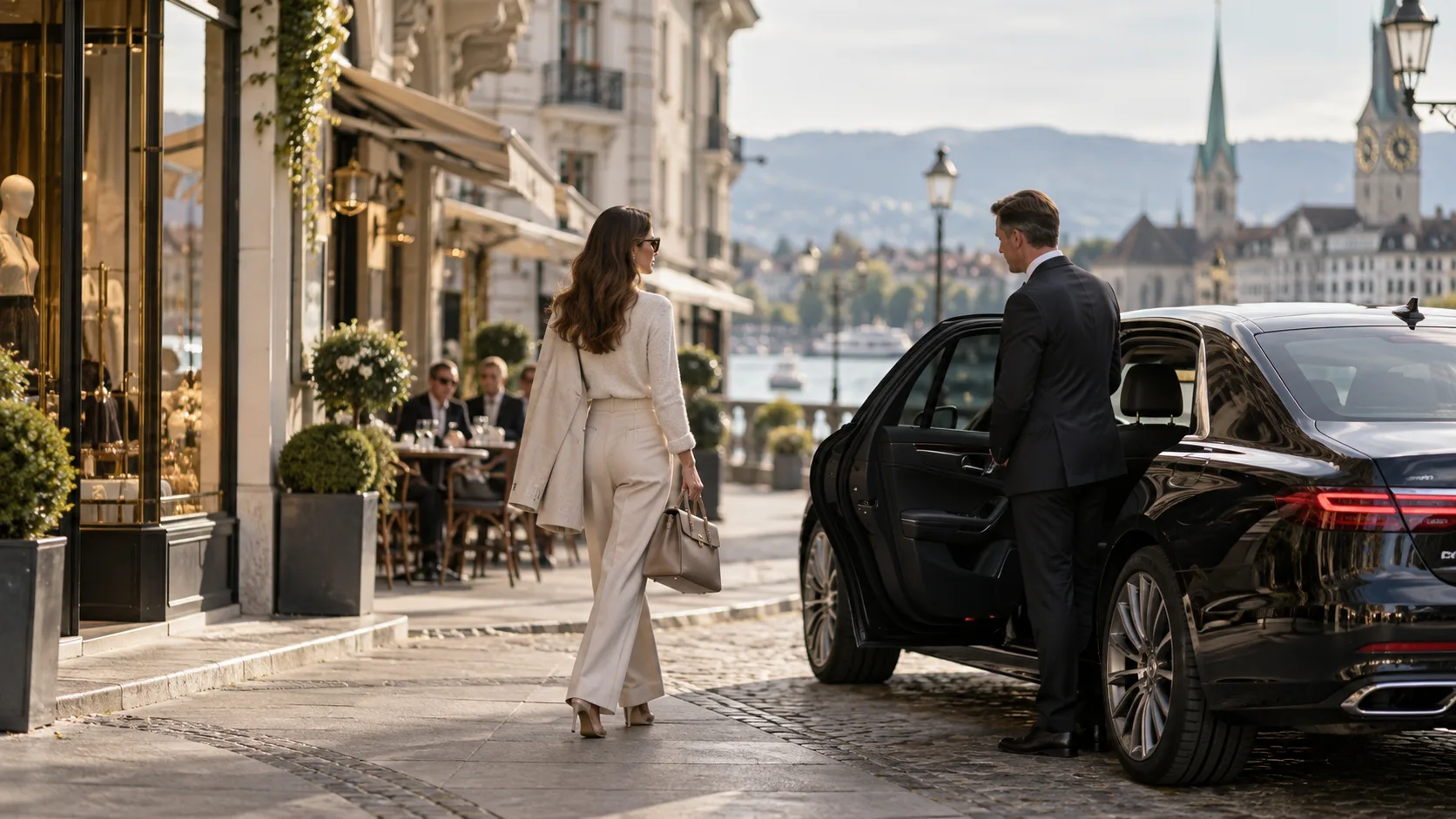
A private transfer is the right choice when you want door-to-door service with no changes, no timetable, and no driving, and when the certainty and comfort are worth paying a premium for. You are collected from your exact location, whether that is a hotel, a home, or the airport arrivals hall, and delivered to your exact destination at the other end. The price is fixed and agreed before you travel, so there is no meter and no surprise. You can work, sleep, take calls, or simply watch the country go by, with your luggage in the boot and nothing to manage.
The situations where this clearly wins are specific. A group of three or four travelers splits the cost until it approaches the combined price of their train tickets, while gaining space and door-to-door service. A business traveler who needs to prepare for a meeting arrives rested and ready rather than having wrangled platforms and connections. Anyone arriving at Zurich Airport bound for Geneva, or the reverse, skips the awkward airport-to-station-to-train-to-destination chain entirely, and our complete guide to Zurich Airport transfers walks through how that first leg works. And on a day with tight timing and real consequences, a car that is yours for the whole journey removes the single biggest variable, which is other people’s schedules.
The trade-off is plain: a private transfer is the most expensive option for one person making a simple trip, and it asks you to book in advance. For a solo traveler watching the budget with time to spare, the train is the better answer and we will happily say so. The private car comes into its own when you are traveling as a group, carrying the weight of luggage or logistics, or facing a day where arriving exactly on time, exactly as planned, matters more than the fare.
Zurich to Geneva: the quick comparison
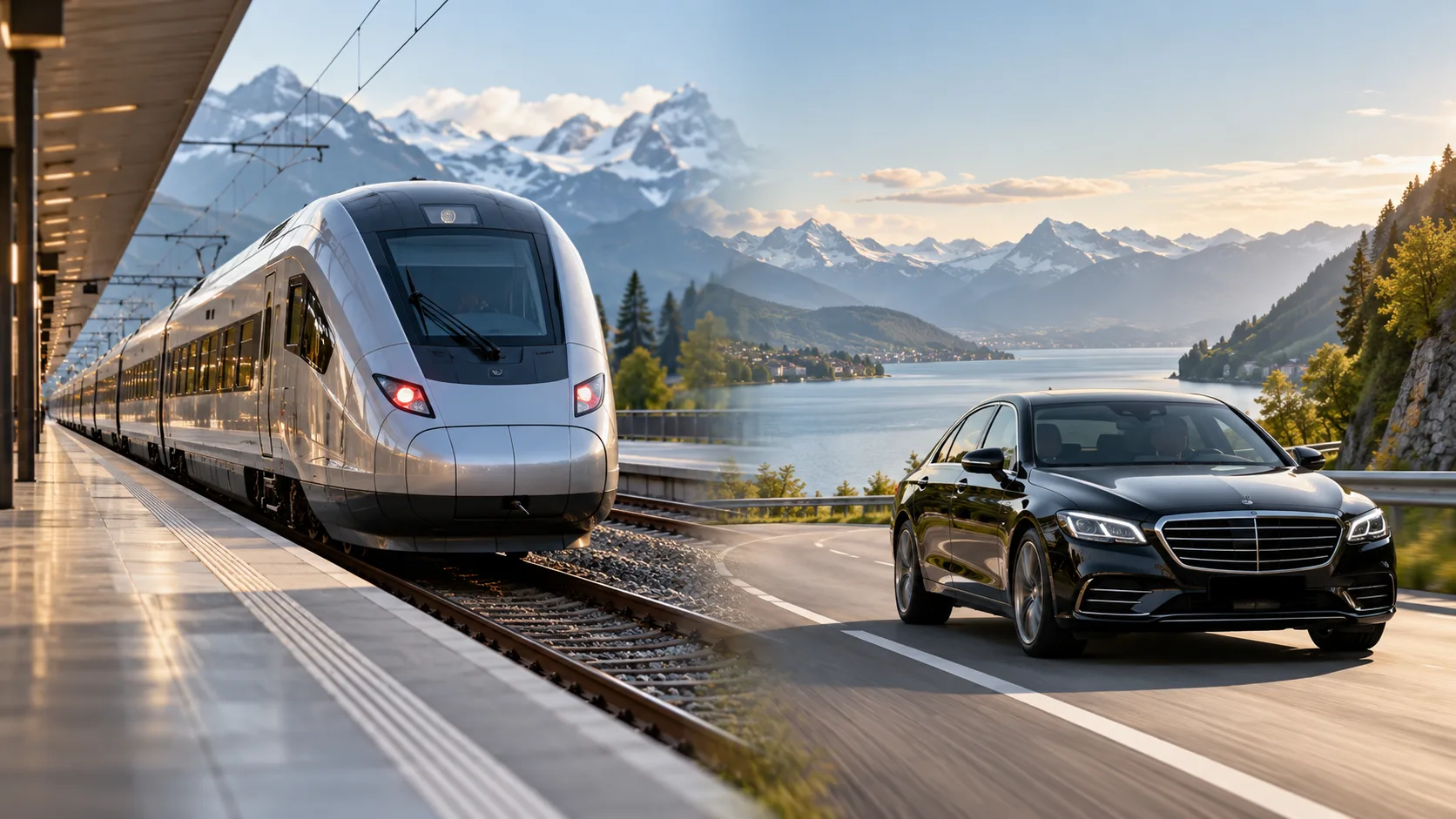
- Train: around three hours, cheapest for solo travelers, city center to city center, run on a fixed timetable. Best for individuals and anyone happy to work or relax on the rail.
- Self-drive: two and a half to three hours, flexible for stops, cheaper per head for groups, but with hidden costs (vignette, fuel, Geneva parking) and the driving falls to you.
- Flying: under an hour in the air but rarely faster door to door once airport time is counted, and usually pricier. Only sensible as part of a wider international connection.
- Private transfer: door to door with no changes, fixed price, no driving, you choose the departure time. Best for groups, business trips, airport runs, and any journey where certainty is worth the premium.
There is no single right answer, only a right answer for your trip. A budget-conscious individual with a free afternoon should take the train. A family with luggage, a group of colleagues, or a traveler on a tight and important schedule will often find the private transfer pays for itself in comfort and reliability.
Flyyt runs private transfers between Zurich and Geneva at a fixed price agreed in advance, door to door, with a professional chauffeur and room for your group and luggage. No timetable, no changes, and flight tracking if you are starting or ending at the airport. See our Switzerland city transfers.